
Maybe you’re considering getting a tattoo, or perhaps you already have one or more. Either way, keep reading — because the symbol you chose, and where you put it, is rarely as random as it seems.
What is a Tattoo?
“A tattoo is a permanent mark or design made on the body by injecting pigment through skin abrasions. It is believed that tattooed designs provide various people with magical protection against diseases or misfortune, or serve to determine the user’s rank, status, or group membership.”
Source: Britannica
Indigenous peoples have used tattooing as a ritual for thousands of years to enhance their cultural and symbolic identity.
Where is the Oldest Tattoo Found?
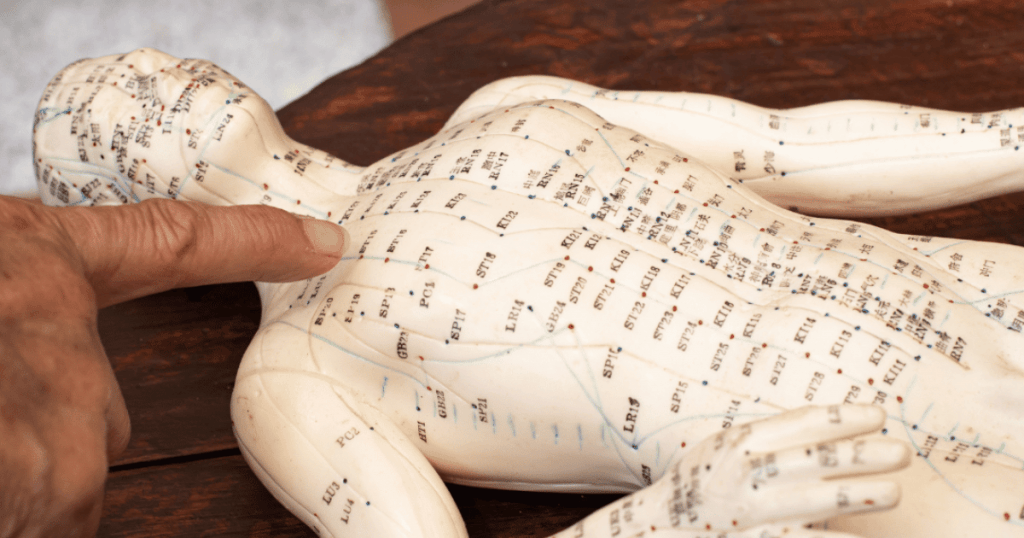
The oldest evidence of a tattoo is found on the mummy known as Ötzi the Iceman, who is 5,300 years old. Ötzi, discovered in a glacier near the Ötztal Alps on the border of Austria and Italy, has 57 tattoos. Interestingly, these tattoos are located on or near acupuncture points, suggesting that tattoos were used as a method to treat ailments.
Source: New Scientist
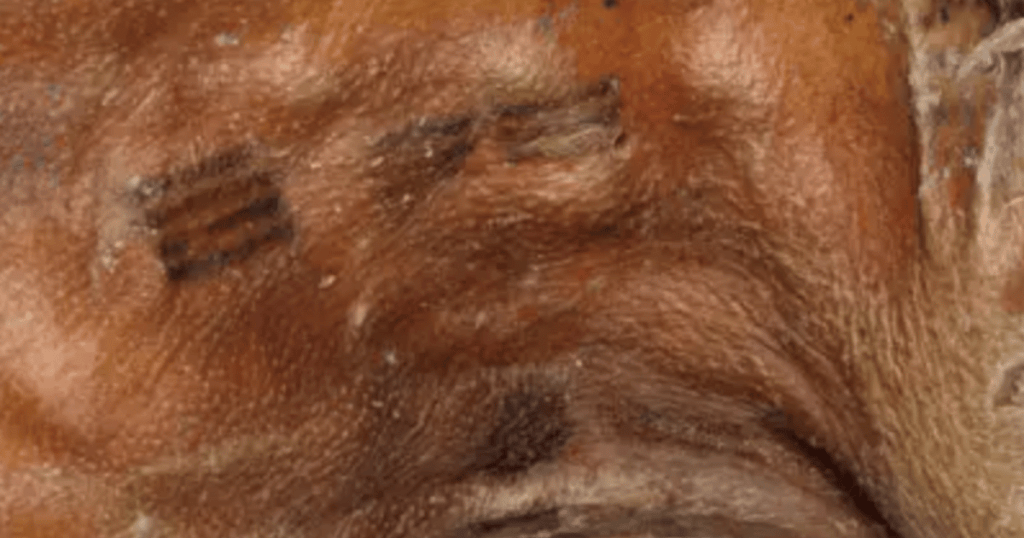
Image: © South Tyrol Museum of Archaeology / Eurac / Marco Samadelli / Gregor Staschitz
Does Getting a Tattoo Affect Your Subconscious?
To understand why tattoo choices are rarely accidental, it helps to look at what’s happening beneath the surface both physically and psychologically.
According to traditional Chinese medicine, acupuncture is a technique used to balance the flow of universal energy (chi) through meridians, which are considered the pathways through which energy flows in the body. In acupuncture practice, needles are inserted into specific points along the meridians to direct the flow of energy.
“During the tattooing process, the needle with ink pierces the skin 100 times per second, depositing ink pigments 1.5 to 2 mm below the skin’s surface in the dermis layer.”
Source: National Library of Medicine
This is a permanent physical intervention. And like any permanent decision made on the body, it carries psychological weight whether you’re conscious of it or not.
The symbol you choose, the placement you select, the timing of when you get it none of these are purely aesthetic decisions. The subconscious mind thinks in images and symbols. It was doing so long before language developed, and it continues to do so beneath every conscious choice you make.
Tattoos Are Encoded into the Subconscious
When you get a tattoo, you are making a permanent decision from a specific psychological moment in time. The symbol you choose, the color, the placement, the person you trust to do it none of these are neutral choices.
Each factor carries meaning consciously or not:
- The symbol reflects something your subconscious already recognizes
- The placement is rarely accidental — the body carries psychological memory
- The color triggers emotional associations that predate conscious thought
- The timing often marks a transition, a loss, or a declaration
- The person you choose reflects the level of trust you’re willing to extend at that moment
This is not mystical. This is how the subconscious mind operates through image, symbol, and embodied experience.
“Maung’s Magical Protection”
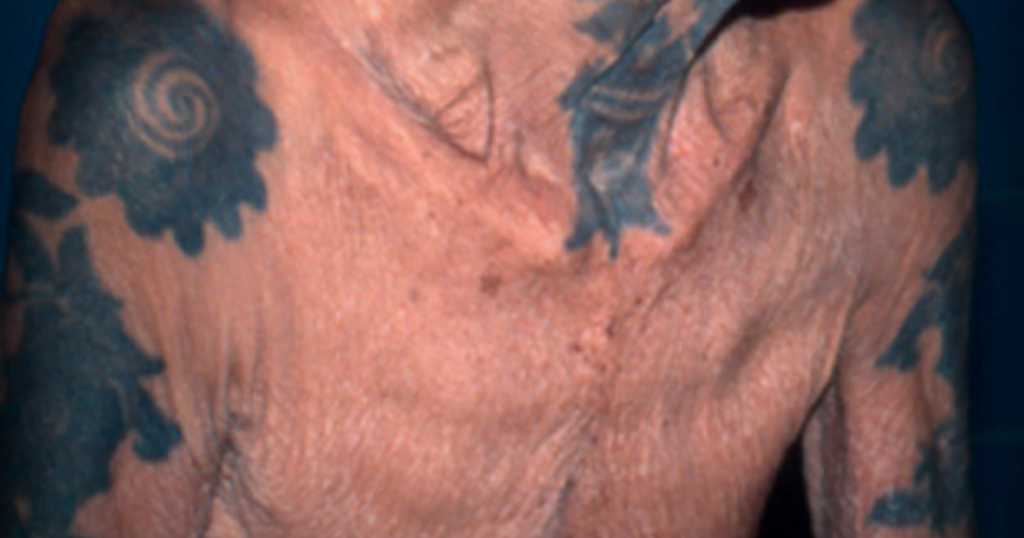
Maung was the last Iban tattoo artist of the Skrang River, Sarawak, Borneo. During World War II, he bravely fought against Japanese soldiers armed with heavy machine guns, a mandau sword, and spears. He stated that all the tattoos he created were “magical” because his protective spirit took him to a meteorite in the forest and then dipped every tattoo pigment he made into it. He claimed that his tattoos protected him from Japanese bullets: “They just passed by me, and I was never injured.” Notably, except for Maung, all approximately 55 Iban guardians who fought along the Skrang River during World War II returned home alive. Maung died a few hours after this photograph was taken.
Source: Lars Krutak
Whether or not you share his belief system, something psychologically significant is happening here.
When a person genuinely believes a symbol protects them, that belief affects how they carry themselves their nervous system, their decision-making under stress, their threshold for fear. This is not placebo dismissal. This is the subconscious mind using a symbol as an anchor.
The tattoo becomes a psychological resource a encoded reminder of identity, strength, and belonging. That’s not nothing. That’s exactly how subconscious encoding works.
Tattoos as Psychological Markers
Before getting your tattoo — even if you think you chose it purely for aesthetic reasons — it’s worth pausing and asking yourself why that symbol, why now.
The subconscious mind often moves faster than conscious reasoning. You may feel drawn to a particular image without being able to fully explain it. That pull is worth paying attention to.
A tattoo chosen this way — not from impulse or trend, but from something that feels personally significant — can function as a psychological marker. It may represent a closing chapter, a new identity, an unresolved fear, a value you want to embody, or a transition you’re moving through.
Even a tattoo that seems dark or unconventional can serve a purpose. The subconscious doesn’t always choose what’s comfortable — it chooses what’s honest.
This is what makes some tattoos genuinely therapeutic: not the ink itself, but the intention and self-awareness behind the choice. A tattoo becomes a permanent record of where you were psychologically at that moment — and sometimes, that record initiates its own process of change.
What Are You Encoding into Your Subconscious with Your Chosen Tattoo?
7 Questions to Ask Before You Ink
Now that you understand the psychological weight behind tattoo choices, here are seven questions worth sitting with before you decide:
1. Intention Why do you want this tattoo — and why now? The intention behind the choice is the most psychologically significant factor. Impulse and intention produce very different outcomes.
2. Decision-Making Process Did this symbol find you, or did you find it? There’s a difference between a choice driven by trend or ego and one that emerges from genuine self-inquiry. Neither is wrong — but knowing which one it is matters.
3. Symbol and Color What does this symbol mean to you specifically — not what it means in general, but what it triggers in you? Color carries emotional association that operates below conscious awareness. What does your chosen color already mean to your nervous system?
4. Emotional Imprint Every tattoo encodes a psychological moment. What emotional state are you in right now? What do you want to carry forward — and what are you ready to leave behind?
5. Placement The body carries psychological memory. Why that specific location? What has happened there, or what do you want to claim there? Placement is rarely as neutral as it seems.
6. The Tattoo Artist Beyond technical skill, consider the environment this person creates. Are you comfortable? Do you feel safe? A permanent mark made under stress or discomfort carries that context. Trust matters here.
7. The Environment The physical and psychological conditions under which you get a tattoo are part of the experience. Are you rushing? Are you calm? The state you’re in during the process becomes part of the memory encoded alongside the mark.
Conclusion
Your tattoo choices are rarely as random as they seem. The symbol, the placement, the timing each carries psychological weight that the subconscious registered long before you consciously decided anything.
This isn’t about assigning fixed meanings to specific designs. It’s about developing enough self-awareness to understand what you’re encoding and why.
This content is not medical advice. It draws on psychological frameworks including Jungian symbolism and subconscious process work.